


Beginner's Guide to African American Cinema

If you have never watched an African American film beyond what a major streaming algorithm pushed your way, you are missing one of the richest, most politically charged, and emotionally layered bodies of work in all of cinema. A beginner African American cinema guide is not just a list of good movies. It is a map of a cultural conversation that stretches back over a century, from Oscar Micheaux's silent-era race films to Jordan Peele's genre-bending horror. Knowing where to start watching Black films makes the difference between a random rental and an experience that genuinely changes how you see American history, culture, and storytelling.
Table of Contents
Quick Takeaways
Key Insight | Explanation |
|---|---|
Start with a filmmaker, not a random list | Watching two or three films by the same director (Spike Lee, John Singleton, Julie Dash) builds context faster than jumping genres randomly. |
Oscar Micheaux is the foundation | He produced more than 44 films and is regarded as the first major African American feature filmmaker. Understanding his work frames everything that came after. |
The 1990s were a turning point, not the beginning | New viewers often start with 1990s films. That is fine, but those films make far more sense once you know the Blaxploitation era and the race films that preceded it. |
Genre matters less than perspective | Urban dramas, comedies, horror, and romance all carry distinctly Black cultural viewpoints. Let the perspective guide your choices, not just the genre label. |
Independent film is the lifeblood of Black cinema | Major studios have historically underserved Black audiences. The most daring and authentic work has almost always come from independent productions. |
Context transforms the viewing experience | A five-minute read on the historical backdrop of a film, its year of release, and the director's intent turns a good watch into a meaningful one. |
Streaming platforms curated for Black audiences change the game | Dedicated platforms like AfricanAmericanMovies.com collect what general algorithm-driven services routinely bury, making discovery far more efficient for new viewers. |
Why African American Cinema Is Its Own Tradition
African American cinema is not simply a subcategory of Hollywood history. It developed alongside mainstream American film, often in direct opposition to it, as a response to racist portrayals and as a vehicle for authentic Black storytelling when no other vehicle existed. That origin story matters for anyone who wants to start watching Black films with real understanding.
Early Hollywood actively degraded Black images on screen. The response was a parallel industry. Black filmmakers, producers, and distributors created what were called race films, motion pictures made for Black audiences whose entertainment options were severely limited by segregation. These films provided honest portrayals and positive messages about the African American community at a time when mainstream cinema offered none of that.
That independent spirit never disappeared. From race films to Blaxploitation to the New Black Cinema of the 1990s to the prestige films of the 2010s, Black filmmakers have consistently had to fight for the right to tell their own stories on their own terms. That fight is embedded in the work itself, and once you understand it, every film in this tradition carries extra weight.
No history of American cinema is complete without the inclusion of Oscar Micheaux, an enterprising writer, director, and producer whose filmmaking career spanned three decades prior to the dawn of the civil rights movement.
The Five Eras Every Beginner Should Know
Treating African American cinema as one undifferentiated block is a common mistake. There are distinct eras, each with its own aesthetic, politics, and context. You do not need to watch them in order, but knowing they exist will help you place any film you encounter.


The Race Film Era (1910s to 1940s)
Oscar Micheaux is the defining figure here. He is regarded as the first major African American feature filmmaker and has been described as the most successful African American filmmaker of the first half of the 20th century. His 1920 film Within Our Gates is the oldest known feature-length film directed by an African American. It tackled lynching, racial violence, and educational access at a time when those subjects were essentially invisible in mainstream film. Micheaux produced more than 44 films over his career, making him not just a pioneer but a sustained force in early cinema.
The race film era is not always easy viewing by modern standards, but it is foundational. A beginner does not need to start here, but even watching one Micheaux film reframes everything that comes later.
The Blaxploitation Era (Late 1960s to Mid-1970s)
Blaxploitation grew out of the combined cultural momentum of the Black civil rights movement and the Black power movement. It introduced complex Black characters in defiant roles and represented a major shift from integrationist to nationalist sentiments in Black screen representation. Some of these films were genuinely groundbreaking. Many were exploitative, produced by white studios chasing Black box office dollars. Learning to distinguish between the two is part of becoming a fluent viewer of this era.
The New Black Cinema of the 1980s and 1990s
This is the era where most new viewers begin, and understandably so. Spike Lee catalyzed this movement with films that tackled complex racial issues and resonated with diverse audiences. Do the Right Thing (1989), set in Brooklyn, is a cultural masterpiece and a foundational text of Black film. John Singleton's Boyz n the Hood (1991) gave authentic visibility to systemic violence, racial inequality, and familial strength in South Central Los Angeles. Singleton became the first African American to be nominated for an Academy Award for Best Director. Julie Dash and Cheryl Dunye brought the Black female experience to the center of independent film during this same period.
Pro tip: If you are starting with 1990s films, watch Do the Right Thing and Boyz n the Hood back to back. They represent two sides of the New Black Cinema conversation and together give you a more complete picture than either film alone.
The 2000s and the Mainstream Push
Black filmmakers gained greater recognition in Hollywood through the 2000s, though progress behind the camera was slower than progress in front of it. This era produced larger budgets and wider distribution for Black stories, but also pressure to soften or universalize narratives for mainstream audiences. The tension between artistic integrity and commercial access defines much of this decade's work.
The Contemporary Era (2010s to Present)
The 2010s and beyond produced a wave of Black films that achieved both critical prestige and cultural impact. Jordan Peele's Get Out (2017) earned Peele an Academy Award and opened mainstream horror to explicitly racial social commentary. Moonlight (2016) explored Black masculinity and sexuality with an intimacy the industry rarely allowed. This era also saw streaming create new pathways for independent Black films that would previously have struggled to find audiences. Dedicated platforms focused on Black cinema make this the best moment in history to be a new viewer discovering this tradition.
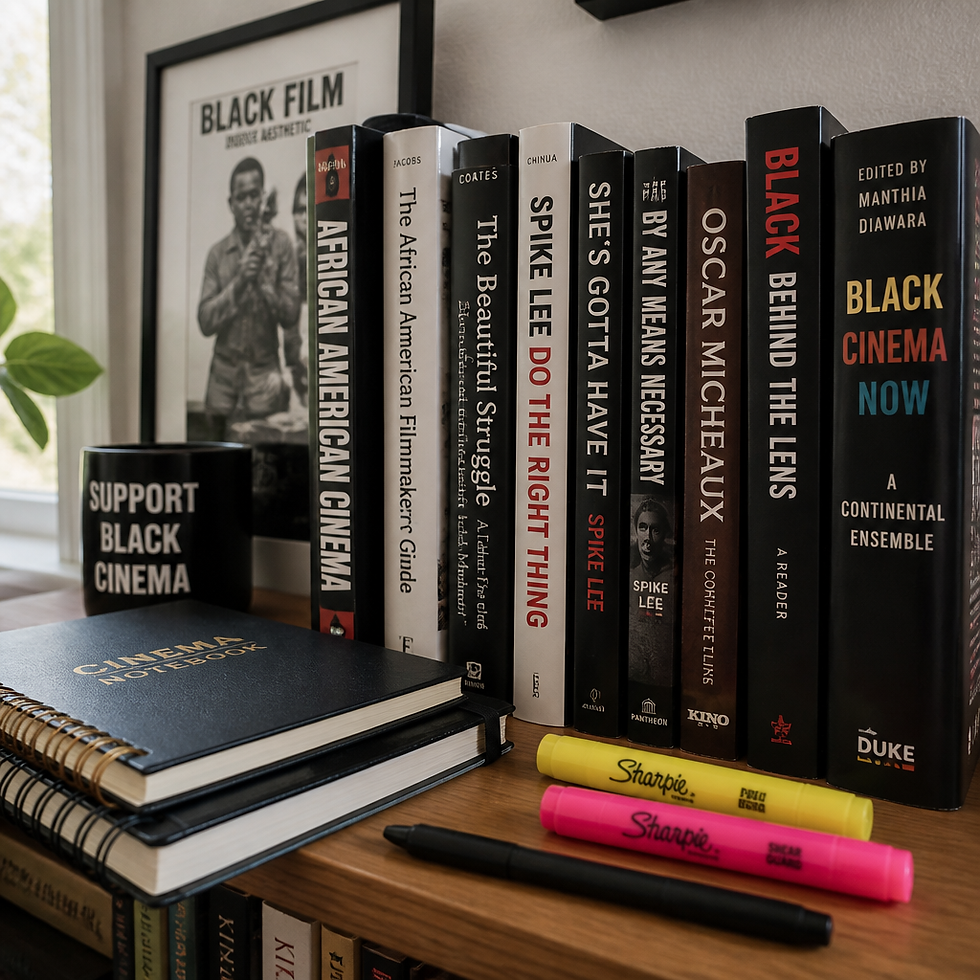
Black Movies for Beginners: A Starting Lineup
The following films are not ranked. Each one serves a different function as an entry point, depending on what draws you to Black cinema in the first place. A viewer drawn to social drama will enter differently from someone drawn to horror, comedy, or street classics.
For the Viewer Who Wants Social and Political Depth
Do the Right Thing (1989, dir. Spike Lee) is the single most argued-over film in this canon. Set over one scorching day in Brooklyn, it explores racial tensions between a Black neighborhood and the white-owned businesses within it. It is not a comfort watch. It is an honest one, and it remains as relevant now as it was in 1989.
Boyz n the Hood (1991, dir. John Singleton) is the definitive portrait of Black life in South Central Los Angeles, told through the lens of young men navigating systemic violence and the weight of community expectation. Singleton's filmmaking debut is lean, precise, and emotionally devastating.
For the Viewer Who Wants Genre Films with Black Perspectives
Get Out (2017, dir. Jordan Peele) is the entry point for viewers who think they do not like prestige films. It is a horror film, but it uses genre mechanics to dissect the everyday terrors of performative allyship and cultural appropriation. Peele earned an Academy Award for Best Original Screenplay for this film. It is genuinely scary and genuinely important.
Urban dramas and street classics represent another major vein of Black genre filmmaking. Films in this space deal directly with crime, loyalty, community, and survival in ways that mainstream Hollywood rarely touches with honesty. AfricanAmericanMovies.com has an extensive collection of urban dramas and street classics that go far deeper than the handful of titles that get mainstream coverage.
For the Viewer Who Wants Historical Context
Within Our Gates (1920, dir. Oscar Micheaux) is the oldest known feature film directed by an African American. Watching it tells you more about the origins of Black cinema in 30 minutes than any summary can. It is uncomfortable, it is uneven, and it is essential.
Moonlight (2016, dir. Barry Jenkins) is the contemporary film that best demonstrates how far the tradition has traveled. Its exploration of Black masculinity and identity in three acts is a masterwork of independent filmmaking, and it offers a useful bridge between the activist filmmaking of the 1990s and the more personal, introspective work of the current era.
Pro tip: When discovering independent Black films through a curated platform, use the genre filters actively. African American cinema covers urban drama, romance, comedy, crime, documentary, and action, all with distinct histories. Picking one genre and going deep in it is more rewarding than skimming across all of them.
How to Approach Watching Black Films as a New Viewer
New viewers sometimes make the mistake of treating Black films as a genre unto themselves, something separate from what they would normally watch. That framing is counterproductive. African American cinema is a tradition of filmmaking with its own aesthetic evolution, its own debates, and its own masterworks. Approach it the way you would approach any serious film tradition: with curiosity, patience, and a willingness to sit with discomfort.
A few practical habits make a real difference. Read a short synopsis or production background before you watch, not to spoil the plot, but to understand the historical moment the film was made in. A film's release year in relation to the civil rights movement, the crack epidemic, the rise of mass incarceration, or specific political events changes what you see on screen. Context transforms the viewing experience from passive entertainment into active engagement.
Second, do not skip the independent films. The most commercially known titles in Black cinema represent a tiny fraction of the tradition. Independent films, many of which never received wide theatrical release, carry some of the most honest and formally inventive work in the canon. Platforms dedicated to Black cinema exist precisely to surface these films for new audiences, which is why a curated destination like AfricanAmericanMovies.com is a more efficient starting point than a general streaming service that buries Black films under algorithm-driven recommendations built for the widest possible audience.
Third, resist the urge to rate every film against mainstream Hollywood production values. Some of the most important films in this tradition were made on small budgets. Oscar Micheaux directed films with no studio support, no distribution infrastructure, and no guarantee of exhibition. The craft is there. The ambition is there. What is sometimes missing is the polish of a studio film, and that absence is part of the history, not a defect.
Comparing Entry Points: Genre, Era, and Filmmaker
There are three main ways to structure your early viewing of African American cinema. Each approach has real advantages and real limitations. The table below lays them out plainly so you can choose the one that fits your current level of engagement.
Entry Point Approach | Best For | Limitation to Know |
|---|---|---|
By Genre (urban drama, comedy, horror, documentary) | Viewers who already know what genres they enjoy and want to find Black films within those genres | Genre watching can stay surface-level without connecting individual films to broader historical movements |
By Era (race films, Blaxploitation, 1990s, contemporary) | Viewers who want to understand how Black cinema evolved over time and why specific films were culturally significant | Chronological viewing can feel academic and slow if you hit early films before you have developed taste for them |
By Filmmaker (Spike Lee, John Singleton, Julie Dash, Barry Jenkins, Jordan Peele) | Viewers who connect to individual artistic voices and want to trace a director's development over multiple films | Filmmaker-focused viewing can create blind spots if you stick only to the directors who already have mainstream name recognition |
In practice, the most effective approach for a new viewer is to combine two of the three. Start with a filmmaker whose work you find compelling, watch two or three of their films to understand their voice, then step back and place those films in their historical era. That combination builds genuine literacy faster than any single approach.
Frequently Asked Questions
What is the best first film to watch for someone completely new to African American cinema?
There is no single correct answer, but Do the Right Thing (1989) functions as the most useful entry point for most new viewers. It is accessible, dramatically compelling, and introduces the political and social themes that run through much of the tradition. It also has enough cultural saturation that discussing it with other viewers is easy, which matters when you are building your film literacy.
Do I need to watch older films like Oscar Micheaux's work as a beginner?
You do not need to start there, but watching at least one film from the race film era gives you a foundation that makes everything else more meaningful. Within Our Gates (1920) is under two hours and is the oldest surviving feature film directed by an African American. Even if silent-era filmmaking is unfamiliar to you, the experience of watching it changes your understanding of why the New Black Cinema of the 1990s felt so urgent.
Is Blaxploitation worth exploring as a new viewer?
Yes, but with some context in hand. The Blaxploitation era produced genuinely bold, politically relevant work alongside films that were primarily commercial products exploiting Black audiences. A new viewer benefits from knowing the difference before diving in. The era's significance lies in the fact that it introduced complex Black characters in defiant roles and represented a real shift in how Black identity was portrayed on screen, even when the surrounding production was exploitative.
What is the difference between mainstream Black Hollywood films and independent Black films?
Mainstream Black Hollywood films have studio backing, wider distribution, and typically larger budgets, but they often face pressure to appeal to the broadest possible audience, which can soften the sharpest edges of a story. Independent Black films operate with fewer resources but more creative freedom, and historically that is where the most daring and authentic work has come from. A dedicated streaming platform focused on Black cinema is one of the best tools for accessing independent work that never received wide theatrical release.
How many films do I need to watch before I can say I understand African American cinema?
Understanding is not a destination with a fixed number attached. A better frame is developing enough vocabulary to engage with new films on their own terms. Twenty well-chosen films across different eras and genres will give most viewers a solid working foundation. The goal is to stop watching Black films as curiosities and start watching them as a continuous, evolving artistic conversation, one you are now participating in as an audience member.
Where is the best place to discover African American films beyond the mainstream titles?
A curated platform built specifically for Black cinema is the most efficient answer. General streaming services surface a narrow band of commercially successful Black films and bury the rest under recommendations built for majority-white audiences. AfricanAmericanMovies.com is built around the full range of Black filmmaking, including urban dramas, street classics, independent productions, documentaries, and films by emerging Black filmmakers, which means the discovery experience is actually calibrated for this audience rather than being an afterthought.
Are there African American films outside of drama and urban genres worth watching as a beginner?
Absolutely. African American comedy has a deep and genuinely funny tradition. Black romance films have a warmth and specificity that general romantic dramas rarely match. Black documentary filmmaking is some of the most important nonfiction work produced in the United States. And Black horror, especially since Jordan Peele's Get Out, is one of the most intellectually exciting genres in contemporary cinema. Limiting yourself to drama and urban films means missing most of what makes this tradition so rich.
Have you already started watching African American films and want to share which title surprised you most? Leave a comment below and tell us where your journey started.
References
Oscar Micheaux filmography and history of his race films at the Internet Archive
Howard University's guide to essential films of the African American experience
Wikipedia overview of the Blaxploitation movement and its cultural origins
EBSCO research overview of innovative Black filmmakers and the 1990s cinema surge
New York Film Academy list of must-watch films from Black filmmakers and actors




Comments